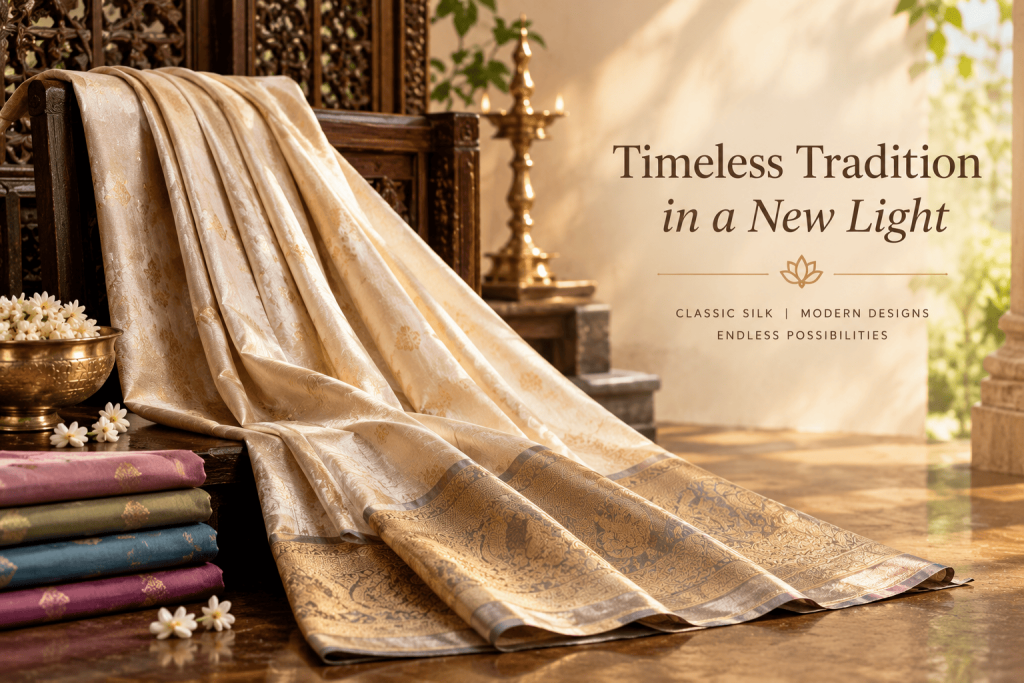
Traditional silk sarees have always been admired for their rich colours, detailed weaving, and cultural value. However, changing fashion tastes have encouraged designers and weavers to explore new ideas. Today, styles such as the Borderless Kanjivaram Saree show how classic silk can take on a lighter and more contemporary look while keeping its traditional charm.
The Timeless Appeal of Classic Silk
Classic silk sarees are closely connected with India’s textile heritage. They are known for their strong fabric, beautiful shine, detailed motifs, and skilled handloom work. For generations, these sarees have been worn during weddings, festivals, religious events, and family celebrations.
The beauty of traditional silk comes from the care used to make it. Skilled weavers carefully select threads, prepare the loom, and create patterns with patience. Many designs also feature traditional flowers, leaves, peacocks, temple shapes, and geometric patterns.
While these details remain popular, modern buyers are also looking for simpler and more versatile designs.
The Rise of Modern Saree Designs
Fashion is always changing, and saree design is changing with it. Many women now prefer clothing that can be worn for different occasions instead of being saved only for special events. This has encouraged designers to create silk sarees with cleaner patterns, lighter details, and fresh colour combinations.
Modern silk designs may use simple borders, smaller motifs, unusual colour pairings, or minimal decoration. These changes can make a traditional saree feel easier to wear without removing its cultural character.
The goal is not to replace traditional weaving. Instead, modern design gives old techniques a new way to connect with today’s generation.
The Growing Interest in Minimalist Weaving
Minimalism has become an important part of modern fashion. In sarees, this can mean fewer patterns, softer contrasts, or a simple body with a carefully designed pallu.
Borderless styles are one example of this approach. By reducing the visual focus on a heavy border, the main body of the saree becomes more noticeable. The texture of the silk, the colour, and the woven motifs can stand out clearly.
This style can also create a graceful appearance that works well for both traditional gatherings and modern celebrations.
Colours That Create a Fresh Look
Colour plays an important role in giving classic silk a new identity. Traditional shades such as red, green, gold, and maroon continue to be loved, but modern collections also explore softer and less expected combinations.
Pastel pink, silver, lavender, teal, beige, mustard, and deep blue can give silk sarees a different personality. Some designs combine bright colours with subtle zari work, while others use one strong colour to create a clean appearance.
These choices allow people to select a saree based on their personal style while still enjoying the richness of traditional silk.
Traditional Craft Meets Contemporary Fashion
One of the most interesting changes in silk sarees is the way traditional craftsmanship is being combined with modern styling. The weaving methods may remain rooted in heritage, while the final design feels more suitable for today’s wardrobe.
A saree with a simple design can be paired with a modern blouse, delicate jewellery, or a simple hairstyle. The same silk fabric can therefore be styled in different ways depending on the occasion.
This flexibility makes traditional silk appealing to younger buyers who want clothing that feels both cultural and current.
Choosing the Right Style for Every Occasion
Modern silk sarees can be suitable for many different occasions. A simple design can work well for daytime celebrations, cultural programs, family gatherings, or festive meals. More detailed sarees can be chosen for weddings and important ceremonies.
When choosing a saree, buyers should consider the colour, fabric texture, motifs, zari details, and overall design. Comfort is also important, especially when the saree will be worn for several hours.
The right choice depends on personal taste and the type of event. There is no single style that suits everyone.
Keeping Heritage Relevant for the Future
The evolution of silk saree design shows that tradition does not have to remain unchanged. When artisans and designers introduce fresh patterns and colours, they help traditional weaving stay connected with modern life.
At the same time, the skill of the weaver remains an important part of the saree’s identity. New designs still depend on knowledge passed from one generation to another.
Styles such as the Silver Kanjeevaram Saree also demonstrate how traditional silk can use different colours and design ideas to create a fresh visual appeal. These changes allow classic weaving traditions to remain interesting to both long-time saree lovers and younger generations.
Modern designs are therefore not simply about following fashion trends. They are about finding new ways to appreciate old skills. By combining heritage craftsmanship with simple designs, fresh colours, and versatile styling, classic silk continues to find a place in today’s wardrobes while preserving the story of India’s rich textile tradition.